
High-Speed Centrifuges
For Efficient Sample Processing and Separation
Common Applications
- Cell harvesting and cell culture processing
- Protein and biomolecule isolation
- Bacterial and microbial sample preparation
- Clarification of biological fluids
- Molecular biology workflows
- Biopharmaceutical process development
- Large-volume sample processing
- Research and quality control testing
High-speed centrifuges are essential laboratory instruments for separating cells, proteins, organelles, nucleic acids, and other biological particles. Designed to deliver high centrifugal forces and rapid processing times, they help researchers improve throughput while maintaining sample integrity.
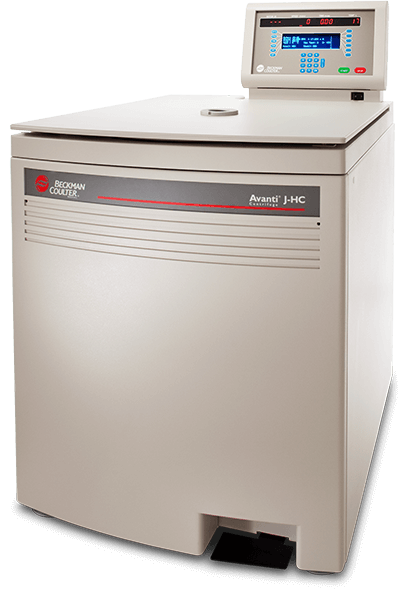
The Beckman Coulter Avanti portfolio of high-speed centrifuges combines advanced rotor technology, intuitive operation, and scalable capacity options for research, bioprocessing, and clinical laboratory applications. Whether you need a compact system for routine workflows or a large-capacity centrifuge for demanding production environments, our solutions provide reliable performance and reproducible results.
Explore our range of floor-standing high-speed centrifuges designed to accelerate sample preparation, streamline laboratory workflows, and support a broad range of separation applications.


FAQ on the High-Speed Centrifuges
What are high-speed centrifuges used for?
High-speed centrifuges are used for cell harvesting, protein isolation, biomolecule purification, sample clarification, and large-volume laboratory workflows. They provide faster processing and higher separation efficiency than low-speed centrifuges.
How fast does a high-speed centrifuge spin?
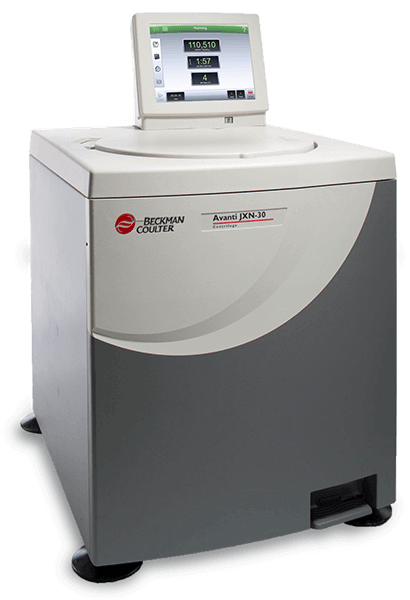
The maximum speed depends on the model and rotor configuration. Many high-speed centrifuges operate between 20,000 and 30,000 RPM and generate forces exceeding 80,000 × g, enabling efficient separation of biological particles and cellular components. The Avanti JXN-30 Centrifuge can generate forces up to 110,510 x g.
What is the difference between a high-speed centrifuge and an ultracentrifuge?
High-speed centrifuges are typically used for separating cells, organelles, and larger biomolecules, while ultracentrifuges achieve significantly higher speeds and centrifugal forces for applications involving viruses, extracellular vesicles, lipoproteins, nanoparticles, and other very small particles.
What is a high-speed centrifuge?
A high-speed centrifuge is a laboratory instrument that separates particles by applying centrifugal force at speeds typically ranging from 10,000 to 30,000 RPM, depending on the rotor and system used. High-speed centrifuges are commonly used for processing cells, proteins, bacteria, and other biological samples.
