
OptiMATE CsCl is a prepared solution of CsCl with a density of 1.784 ± 0.014 g/mL, reducing the manual preparation of powder dilution and allowing you to always have the same starting concentration.
Cesium Chloride (CsCl)—High Resolution for Nucleic Acids and Viral Particles
Published: outubro 22, 2026
Key Takeaways
- CsCl provides extremely high density resolution.
- Self-forming gradients reduce the need for preformed gradient preparation.
- Commonly used for plasmid DNA, genomic DNA, and viral particle analysis.
- Can distinguish closely related particle populations, including viral capsid variants.
- May require longer run times and downstream desalting.
What Is a Cesium Chloride Gradient?
A cesium chloride (CsCl) gradient is a density gradient medium used for high-resolution density-based separations. Unlike many pre-formed gradients, CsCl can create a self-generating density gradient during ultracentrifugation, allowing particles to migrate to positions that correspond closely to their buoyant density. This makes CsCl particularly useful for nucleic acid purification and resolving viral particles with subtle density differences.
Common Applications of CsCl Gradients
CsCl gradients are most valuable when applications require maximum density resolution. They are commonly used to separate closely related particle populations that may be difficult to resolve using other density gradient media.
-
Plasmid DNA Purification
Separate plasmid DNA from contaminants based on buoyant density to achieve highly purified nucleic acid preparations for downstream molecular biology and genetic engineering workflows.
-
Genomic DNA Studies
Resolve genomic DNA from other cellular components and nucleic acids when high-purity samples are needed for analysis, characterization, or research applications.
-
Viral Particle Characterization
Characterize viral particles according to density differences to assess sample quality, identify heterogeneous populations, and support viral vector research and development.
-
High-Resolution AAV Analysis
Distinguish full, empty, and partially filled AAV capsids with high density resolution, enabling detailed characterization of viral vector preparations.
-
Nucleic Acid Separations
Separate nucleic acids with subtle density differences when conventional gradient media do not provide sufficient resolution for the application.
Example Application:
Researchers characterizing viral vectors may use CsCl gradients to distinguish full capsids from empty and partially filled capsids based on subtle density differences. This high-resolution separation can support detailed characterization of viral particle populations.
Advantages and Limitations of CsCl Gradients
CsCl offers some of the highest density resolution available in density gradient centrifugation. However, researchers should balance separation performance against workflow complexity, centrifugation time, and sample compatibility requirements.
Advantages
- Extremely high density resolution
- Self-forming gradient capability
- Excellent for density-based separations
- Can distinguish closely related particle populations
Limitations
- Long centrifugation times
- Hyperosmotic conditions
- Additional desalting or buffer exchange may be required
- Less suitable for biologically sensitive samples
When Is CsCl Not the Best Choice?
Although CsCl can provide exceptional density resolution, it may not be the most practical choice for every workflow. Applications requiring rapid turnaround, gentle processing conditions, or simplified downstream recovery may benefit from alternative gradient media.
Consider Alternative Media When...
- Short turnaround times are required.
- Sensitive biological samples must be preserved.
- Downstream desalting or buffer exchange creates workflow challenges.
CsCl vs. Iodixanol: Resolution or Biological Compatibility?
| Consideration | CsCl | Iodixanol |
|---|---|---|
| Density Resolution | Highest | High |
| Biological Compatibility | Lower | Higher |
| Viral Vector Applications | Characterization | Purification |
| Sensitive Samples | Less Suitable | Better Suited |
| Processing Complexity | Higher | Lower |
OptiMATE Gradient Reagents are designed to simplify density gradient preparation workflows by providing ready-to-use, cGMP-supporting formulations for common gradient applications. For laboratories performing routine density gradient centrifugation, standardized reagents can help improve consistency while reducing preparation time.
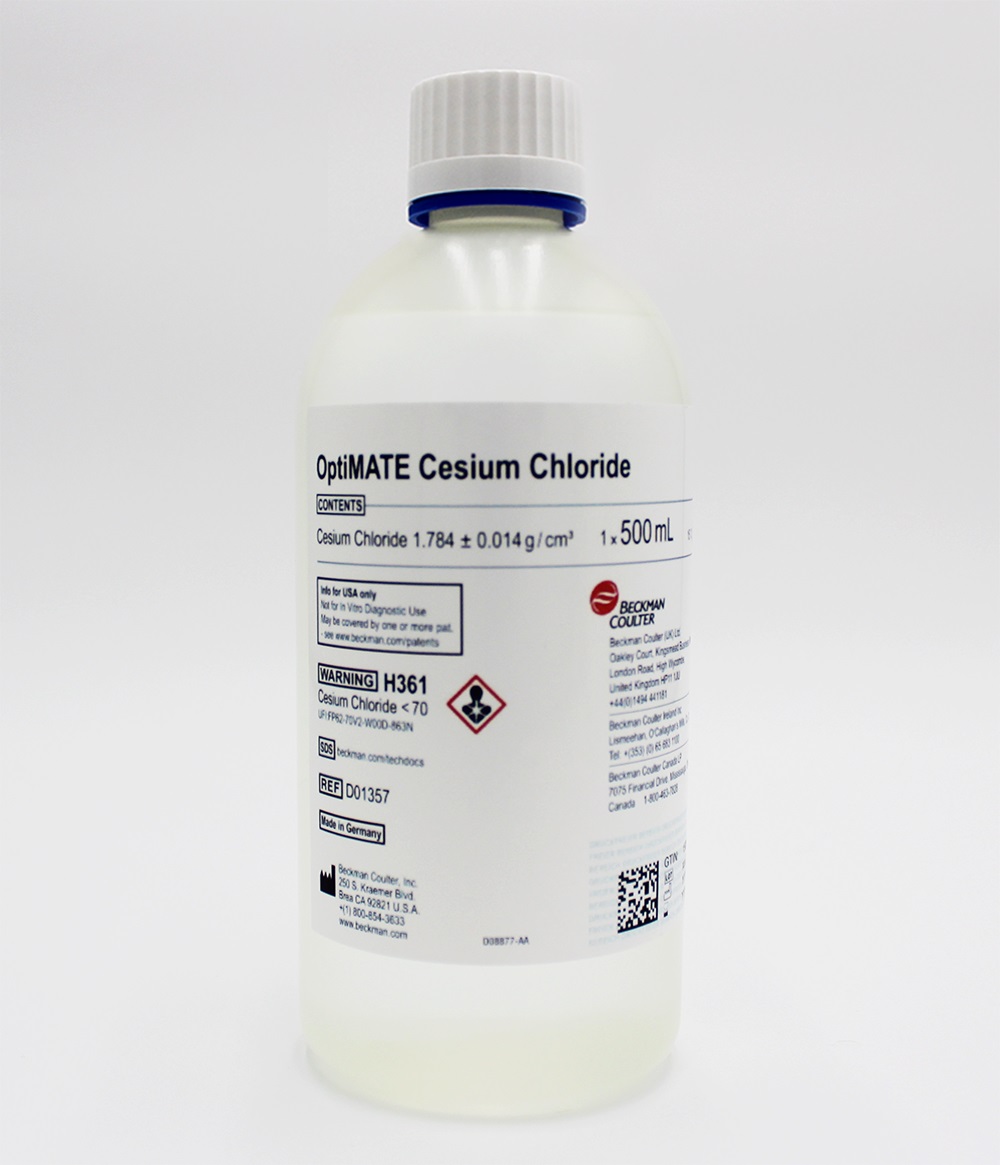
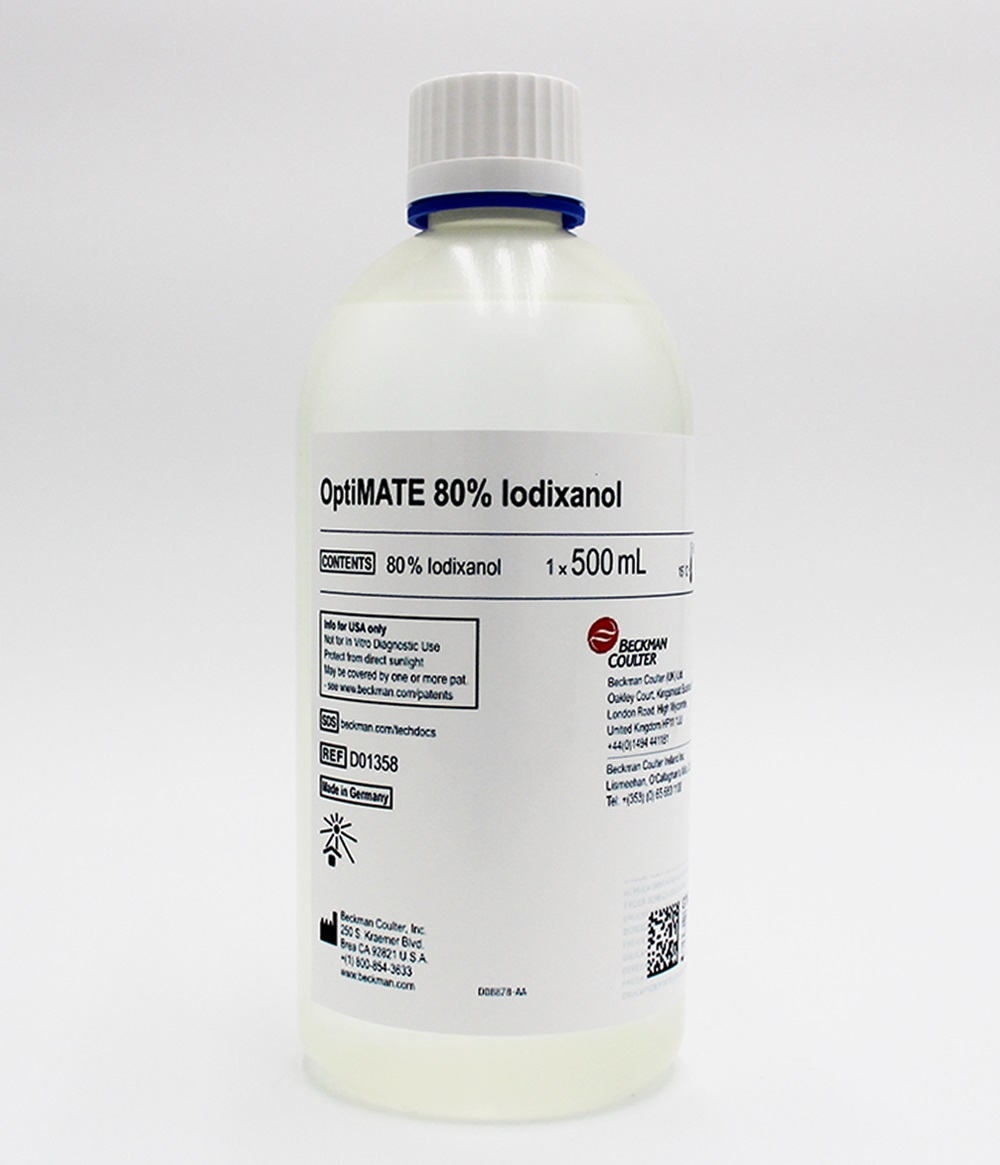
OptiMATE iodixanol is the highest on-market concentration at 80% w/v, enabling you to increase your sample per tube and decrease your bottle-related waste.
Related Resources
FAQ about Cesium Chloride Gradients
What is CsCl density gradient centrifugation used for?
CsCl density gradient centrifugation is primarily used for separating nucleic acids and viral particles based on small differences in buoyant density.
It is widely considered a gold standard for DNA purification, although its high osmotic pressure can affect biological samples.
Why is cesium chloride used in DNA centrifugation?
Cesium chloride can form a self-generating density gradient during ultracentrifugation and provides exceptionally high-density resolution. DNA migrates through the gradient until it reaches the region corresponding to its buoyant density, enabling density-based purification and analysis.
Can CsCl separate full and empty AAV capsids?
Sucrose is well established for proteins, ribosomes, and general fractionation. Iodixanol supports viral vector, extracellular vesicle, and sensitive-particle workflows. Ficoll is commonly used for PBMC isolation, while Percoll supports cell and organelle separation. CsCl is selected when high density resolution is required for nucleic acids or viral particles.
What is the difference between CsCl and iodixanol gradients?
CsCl prioritizes exceptionally high density resolution and is useful for nucleic acid and viral particle characterization. Iodixanol maintains near iso-osmotic conditions and is more compatible with sensitive biological samples. The appropriate choice depends on whether maximum resolution or biological compatibility is the primary requirement.

